Welcome to the Blasiak Project Page

Welcome!

My research interests focus on the large-scale Quantum Chemistry — investigating complex condensed-phase systems from the perspective of Quantum Mechanics. I am currently a research associate in Goethe University Frankfurt, in the Theoretical Chemistry of Complex Systems group.

Read recent posts to get to know more about my research and collaborations.

1 / 8
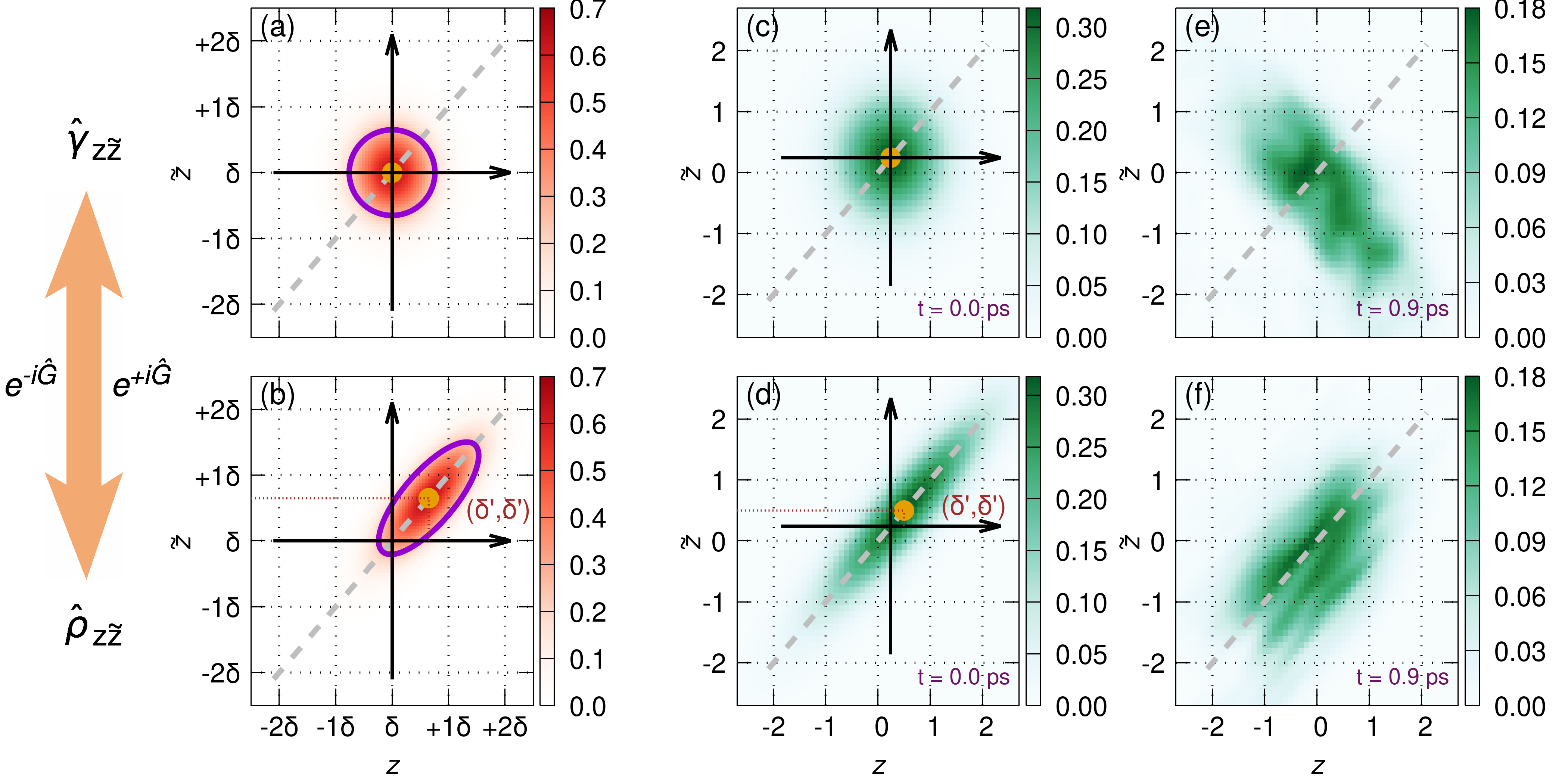
iBT TFD RDMs
Inverse Bogoliubov Transformation in Thermofield Dynamics of open quantum systems is convenient for propagating correlated wavepackets from computational cost perspective, but also highly non-trivial for phase space analysis. Here we demonstrate new methods how to efficiently analyse the time evolution of the physical system in terms of the auxiliary 2-particle reduced density matrix. This approach, once combined with electronic structure fragmentation methods, is a powerful way to include thermal ensemble in open quantum systems such as electronic chromophores with disorder. It is relevant for studying energy and charge transfer processes in organic photovoltaic materials.
2 / 8
Bio-SolEFP
Bio-SolEFP method enables calculations of IR spectra of selected vibrational chromophores in very complex molecular environments like aqueous solutions of proteins and their interfaces, taking into account intricate interplay of various quantum mechanical effects on intermolecular interactions.
3 / 8
JCC Cover 2021
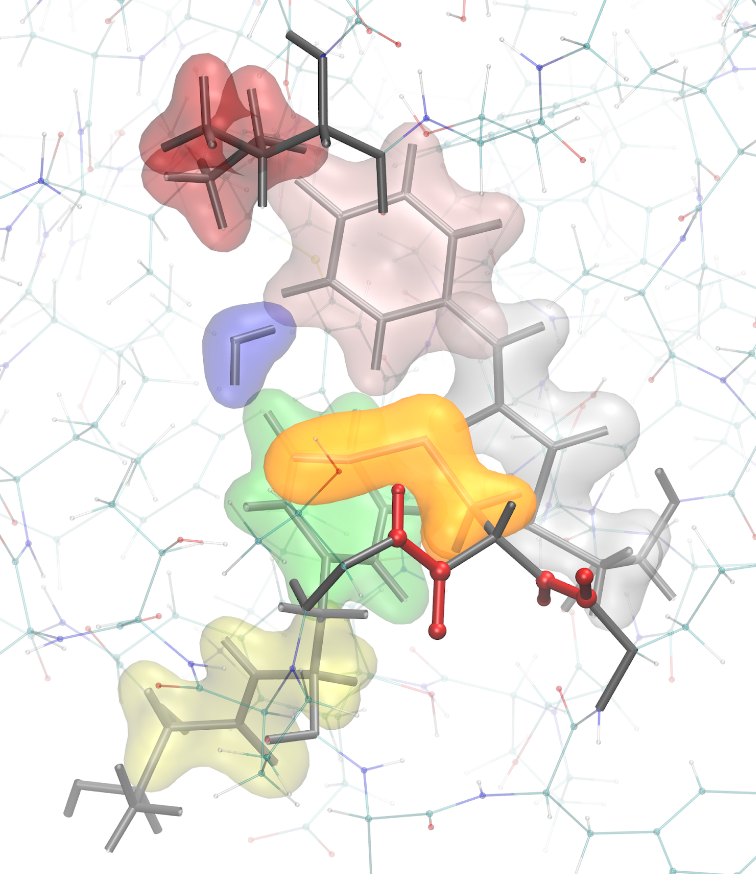
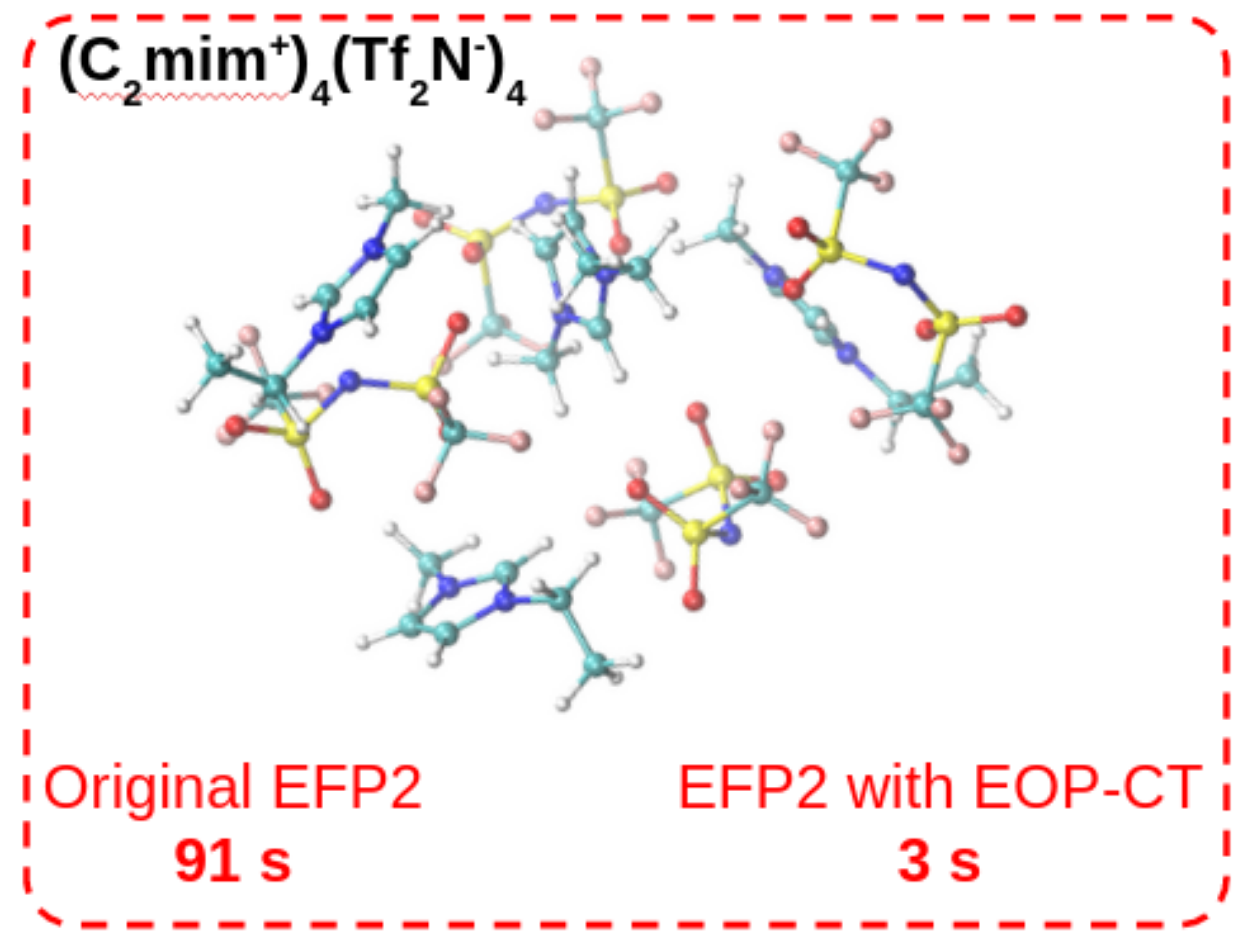
EOP method encapsulates electron repulsion integrals in fragment-based approaches to Quantum Chemistry, making them many orders of magnitude faster and turning them into effective fragment potentials.
4 / 8
EOPs for EET
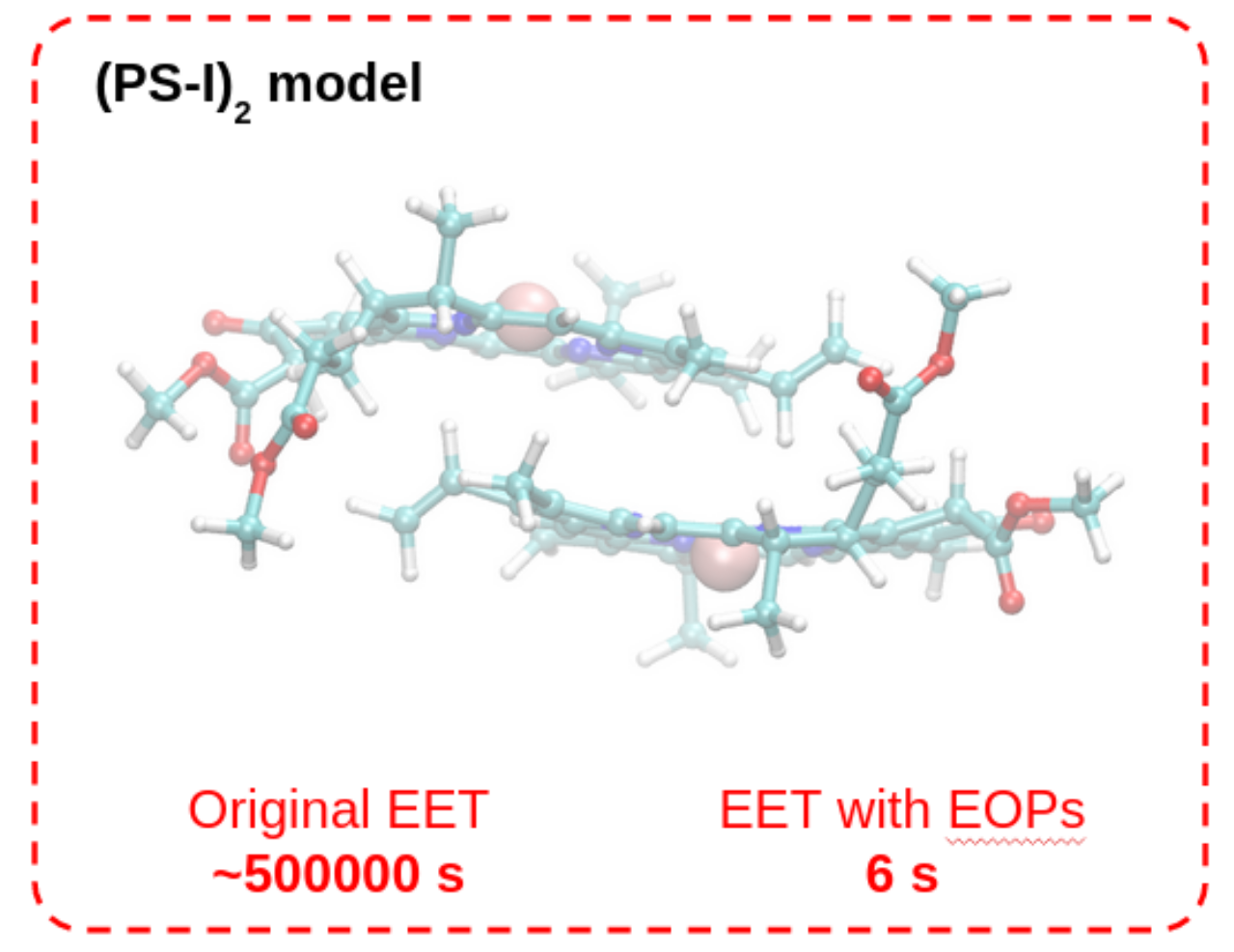
EOP method provides effective fragment parameterization of excitonic energy transfer couplings (EET). This is the first step to generate complex excitonic Hamiltonians for arbitrary arangement of chromophores with disorder. It is relevant for studying energy and charge transfer processes in organic photovoltaic materials.
5 / 8
Bio-SolEFP calmodulin
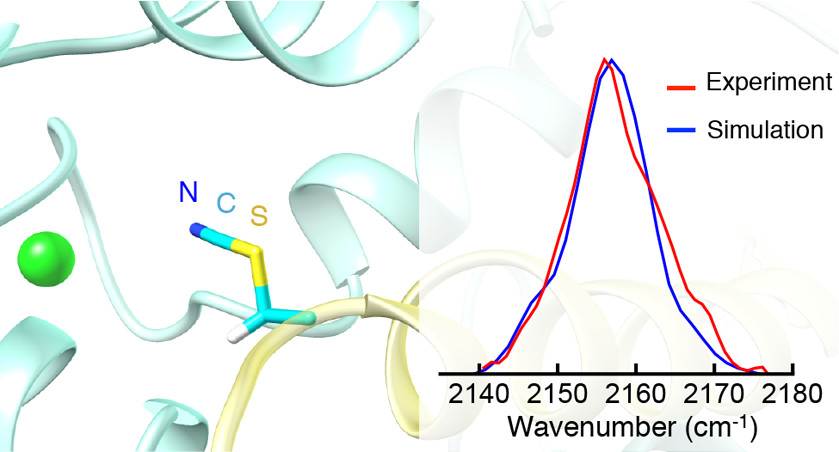
In collaboration with the Londergan group, we applied the Bio-SolEFP fragmentation method to establish quantitative connection between the FTIR line shape and the structural and dynamical charactristics of SCN-labeled calmodulin in its native form in water.
6 / 8
DMST
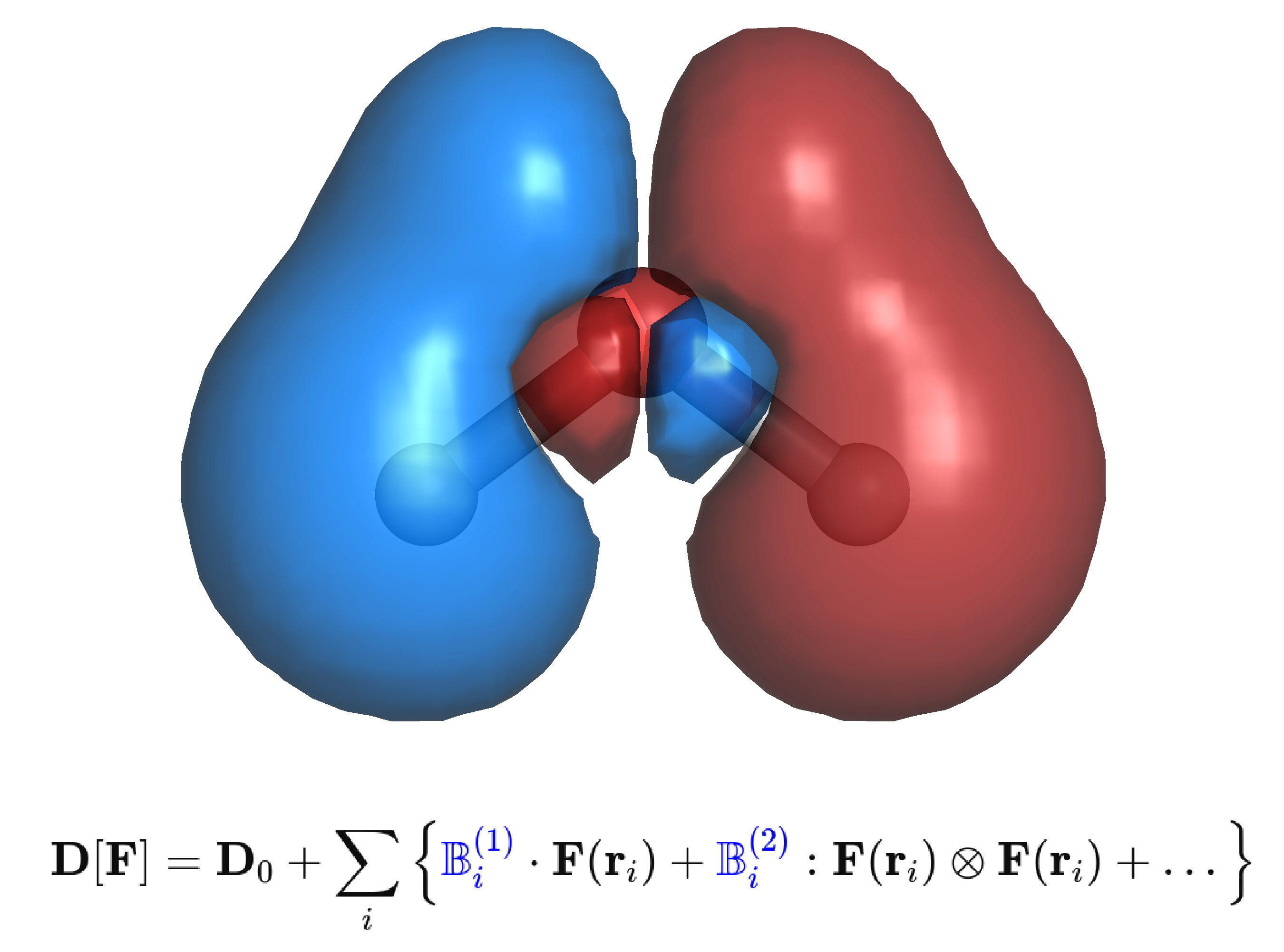
We introduced electrostatic 1-particle reduced density matrix susceptibility tensors, to quantitatively predict the change of the 1-particle reduced density (1-RDM) of a quantum system induced by arbitrary external electrostatic field perturbation. Our method is very inexpensive since it relies only on simple multiplications between (3x3)-matrices and 3-vectors while providing the susceptibility kernel representation at an arbitrary level of theory. This method could enhance performance of density embedding schemes for QM/MM calculations with DFT functionals in the future.
7 / 8
EOPs for EET
EOP method makes the transfer (CT) term of the state-of-the-art EFP2 method less time-consuming by more than one order of magnitude.
8 / 8
Quantum Chemistry Workshop
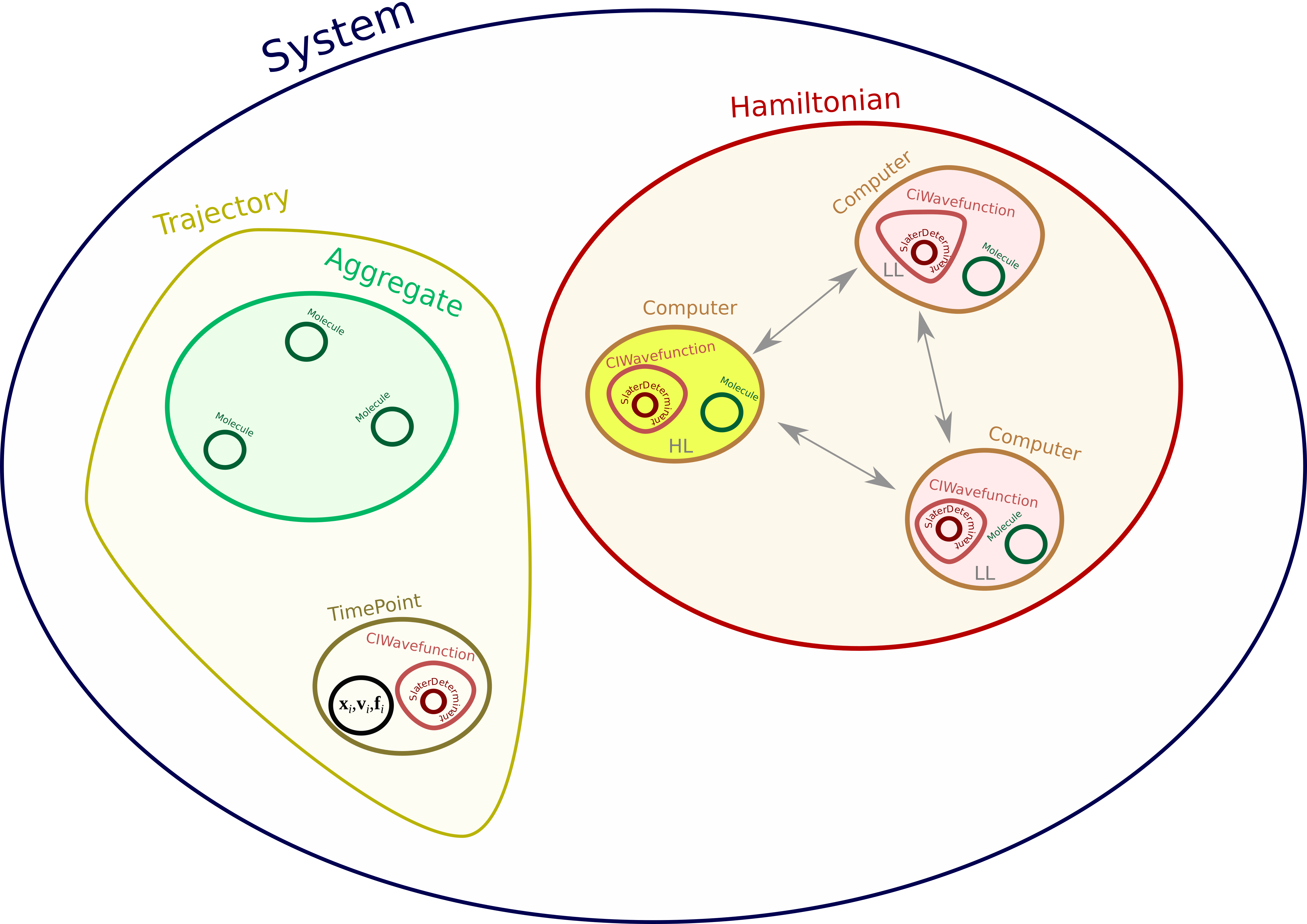
Visit our Quantum Chemistry Workshop to learn more about how to materialize your scientific ideas for implementing your computational methods into action.


Posts

subscribe via RSS